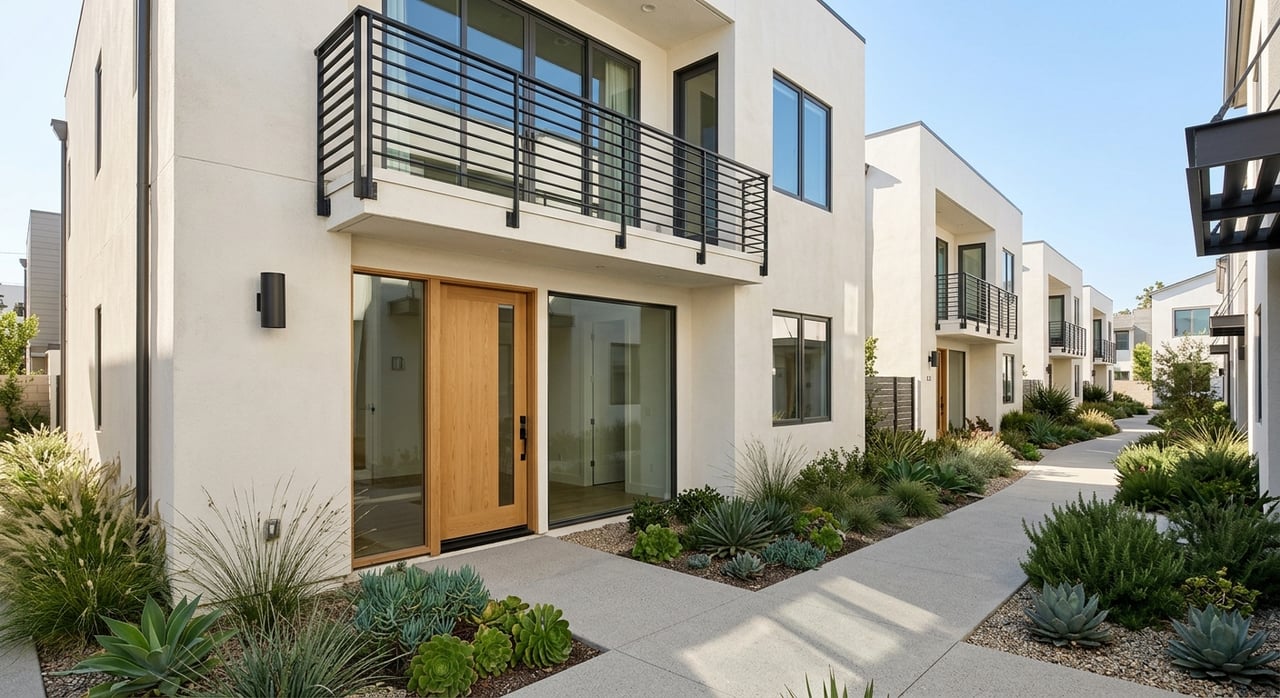
Explore Foster City Condo Living and Townhome Options
April 2, 2026
April 2, 2026
If you want Peninsula living with less exterior upkeep and easy access to the water, Foster City deserves a close look. For many buyers, condos and townhomes here offer a practical middle ground between a detached home and a larger multifamily building. You get a planned waterfront setting, shared amenities in many communities, and outdoor access that is woven into daily life. Let’s dive in.
Foster City is a planned community built in the 1960s on former Brewer’s Island, and its layout is closely tied to a 200-acre artificial lagoon system and the bayside edge of the city. According to the city, the lagoon runs five miles through Foster City and plays a role in both recreation and stormwater runoff control. That setting helps explain why attached housing feels so natural here.
It is also a meaningful part of the local housing stock, not a small niche. Foster City’s FY 2024-25 budget reports 13,796 housing units as of January 1, 2023, including 19% attached single-family homes and 33% in complexes of 10 or more units. If you are considering a condo or townhome, you are looking at a housing type that is well established in the community’s overall mix.
Census QuickFacts, cited in the city budget, reports an owner-occupied housing rate of 50.8% and a median value of owner-occupied housing units of $1,838,200. In other words, buyers looking at attached homes in Foster City are still entering a high-value Peninsula market. The appeal is often about lifestyle, maintenance, and location as much as price point.
One of the biggest draws of condo and townhome living in Foster City is how easy it is to spend time outdoors without needing a large private yard. The city reports more than 160 acres of park and open-space land, including bike paths, sports fields, tennis courts, basketball courts, picnic facilities, bocce courts, walkways, a pedway, and a wildlife refuge. That creates a recreation-forward environment built around shared spaces.
If you picture morning walks, stroller-friendly paths, or an after-work bike ride, Foster City has infrastructure that supports that rhythm. The city describes the Levee Pedway and Bay Trail as a mostly paved multi-use path that is smooth enough for roller skates and baby strollers. It is accessible from neighborhood streets and connects south to Redwood Shores and north to San Mateo’s bayshore parks.
That matters for condo and townhome buyers because many attached-home neighborhoods are integrated into this network. You may be able to leave home on foot or by bike and reach the trail system directly from nearby streets. For many buyers, that is a real quality-of-life advantage.
Foster City’s waterfront identity is not just visual. It affects what you can actually do on a regular weekend. The city says the lagoons and waterways cover more than 200 acres, and powerboats are prohibited at all times, which helps preserve a calmer setting for non-motorized recreation.
At Leo J. Ryan Memorial Park, you will find 20 acres of lawn areas, lagoon access, a gazebo, and restrooms. The park also offers rentals for windsurfing, pedal boats, kayaks, and stand-up paddleboards. That means you can enjoy the water even if you do not own gear or a boat.
The city also allows swimming in the lagoon, along with non-commercial fishing with a state license, and provides two boat ramps plus water concessions. For buyers comparing Peninsula locations, this gives Foster City a distinct everyday feel. It is less about maintaining a big backyard and more about having parks, paths, and water activities close at hand.
If you are shopping for a condo or townhome, HOA dues are likely one of your first questions. In California, homeowners associations make and enforce rules for planned communities, subdivisions, and condominium buildings. The California Attorney General’s HOA consumer guidance notes that residents typically must join the association, follow the rules, and pay HOA fees and assessments.
What those dues cover can vary a lot from one Foster City community to another. The California Department of Real Estate explains that, unless the governing declaration says otherwise, the association is usually responsible for repairing, replacing, and maintaining the common area, while each owner is responsible for their separate interest. The key phrase is “unless the declaration says otherwise,” because the exact split is project-specific.
In practical terms, dues may help support things like:
The only reliable way to know what is included is to review the HOA documents, budget, and reserve information for the specific property you are considering. Two communities in the same city can have very different responsibilities and fee structures.
Many buyers are drawn to condos and townhomes because they want fewer day-to-day exterior chores. That can be true, but it is important not to assume that the HOA handles everything outside your walls. The Department of Real Estate specifically notes that maintenance responsibility does not always track fee ownership, and exclusive-use common area can be a special case.
For example, a community may maintain certain roofs, siding, or shared landscaping, while owners remain responsible for patios, balconies, windows, or other limited-use areas. Another community may shift more of the exterior obligation to the owner. This is why due diligence matters so much in attached-home purchases.
When you review a property, focus on the details rather than the label. A townhome and a condo can each come with different maintenance expectations depending on the governing documents. Understanding that split up front can help you budget realistically and avoid surprises later.
Foster City has a large share of housing built in earlier decades. The city budget says 85% of housing units were built between 1960 and 1999. For condo and townhome buyers, that makes the age of the building and the association especially important during due diligence.
Older communities are not automatically a concern, but they do deserve a more careful look. You will want to understand whether the association has kept up with major repairs and planned ahead for future work. Reserve levels, recent capital projects, and the history of assessments can tell you a lot about how the community is managed.
A smart review often includes:
The Department of Real Estate advises buyers to review the governing documents and budget to understand what assessments cover and how reserves are funded. In a city with many older attached-home communities, that step is especially important.
In Foster City, flood protection is part of the local landscape, so it is worth understanding as you evaluate where to buy. The city reports that the levee improvements project began in 2020, restored full Bay Trail access in October 2023, and was recognized with a ribbon cutting in February 2024. This points to ongoing public investment tied to long-term livability and access.
The city also notes that lagoon water levels are raised in summer and lowered in winter to accommodate stormwater. For buyers, this is a reminder that Foster City’s relationship to the water is both recreational and infrastructural. It is one of the reasons the city feels distinctive, and one of the reasons local context matters when comparing homes here.
Every Peninsula city offers a different mix of housing, outdoor access, and neighborhood layout. Foster City stands out because attached housing is a substantial part of the housing stock, and it sits alongside a continuous lagoon and Bay Trail system. That combination is a big part of why condo and townhome living here can feel especially appealing.
If your priorities include easier maintenance, nearby outdoor recreation, and a planned community setting, Foster City may check boxes that are harder to find elsewhere on the Peninsula. The lifestyle is less backyard-centric and more focused on shared open space, waterfront paths, and practical access to recreation. For many buyers, that tradeoff feels like a smart fit.
The right choice comes down to how you want to live day to day. If you want more space than a typical apartment, but less exterior responsibility than many detached homes, an attached home may offer the balance you are looking for. In Foster City, that choice often comes with access to trails, parks, and water-oriented amenities that shape everyday routines.
The most successful buyers usually look beyond square footage and monthly dues. They ask how the HOA is run, what maintenance responsibilities stay with the owner, how well reserves are funded, and how the location connects to the parts of Foster City they want to use most. That is where good local guidance can make the search much clearer.
If you are thinking about buying or selling an attached home on the Peninsula, Caitlin Beanan can help you evaluate the tradeoffs, understand the local market, and move forward with confidence.
Looking to buy, sell, or just have a question? I'm always available to help and would love to work with you. Contact me today to find out how we can be of assistance to you!