Belmont CA Guide for Move-Up Buyers Seeking Houses
April 23, 2026
April 23, 2026
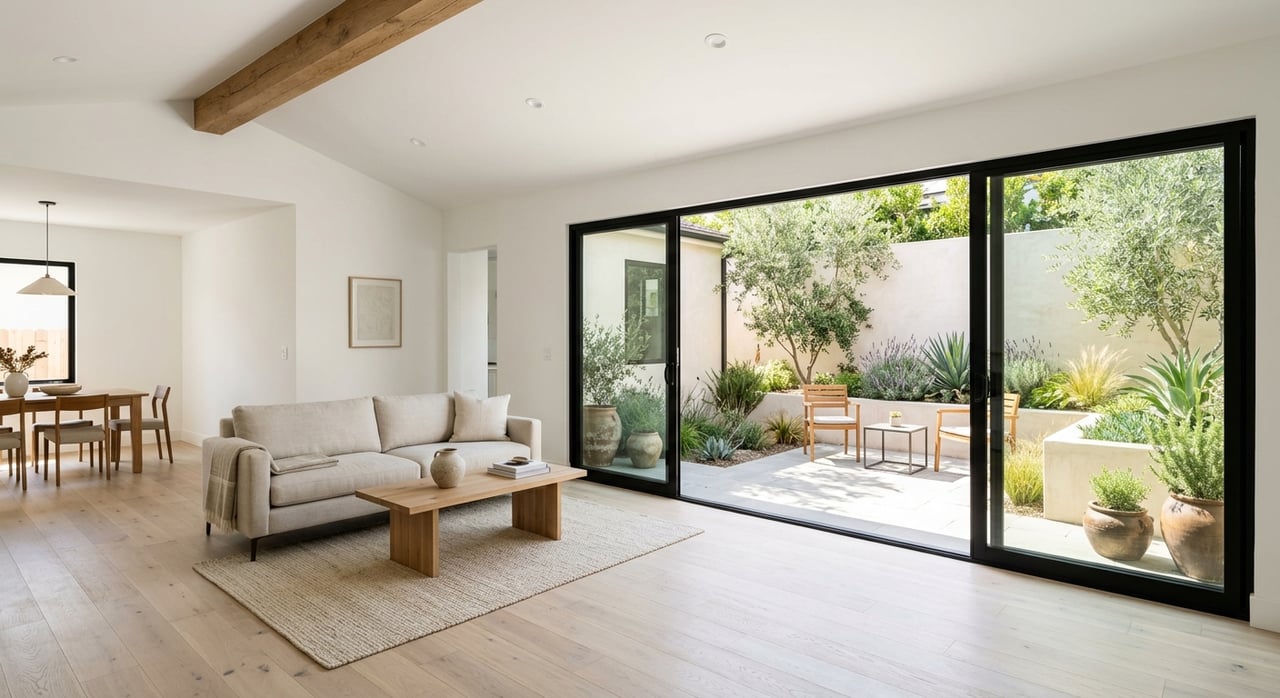
If you are moving up from a condo, townhouse, or smaller house, Belmont can feel like the Peninsula market that checks a lot of boxes at once. You get detached-home neighborhoods, access to transit, open space, and a small-town feel, but you also step into a market where well-prepared buyers need to move fast. This guide will help you understand what Belmont single-family homes look like, how the market behaves, and which tradeoffs matter most before you buy. Let’s dive in.
Belmont is a premium detached-home market on the Peninsula, not a budget alternative. According to Redfin’s Belmont housing market data, the median sale price was about $1.935 million in March 2026, with homes getting around 7 offers, selling in a median of 10 days, and closing at a median 108.8% of list price. Realtor.com also points to a tight market, showing 54 homes for sale, a median listing price of $1.95 million, and a median 12 days on market.
For move-up buyers, that means preparation matters almost as much as budget. In Belmont, the right house can attract fast attention, and waiting too long can mean missing the best fit. If you are planning to buy here, you should be ready with financing, a clear price ceiling, and a short list of must-haves before a property hits your radar.
Belmont sits in an interesting middle ground among nearby Peninsula cities. Redwood City’s March 2026 median sale price was about $1.931 million, while San Mateo was lower at $1.688 million and San Carlos was much higher at $2.75 million. That puts Belmont close to Redwood City, above San Mateo, and below some of the Peninsula’s priciest detached-home markets.
For many move-up buyers, that comparison is useful because it sets expectations. Belmont is still a premium purchase, but it may feel like a strong value if you want a detached home in a Peninsula location with hills, views, and access to transit. The key is understanding that your money may buy very different home types depending on where in Belmont you search.
Belmont’s own planning documents say single-family homes are the predominant form of development in the city and make up about 41% of the planning area. They are concentrated most heavily west of El Camino Real, with smaller pockets in Sterling Downs and Homeview, according to the Belmont 2035 General Plan Update. Belmont Village near the station is more focused on transit-oriented growth, so detached-home shopping typically happens in the surrounding residential neighborhoods.
That matters if you are moving up from a condo lifestyle. In simple terms, Belmont gives you a real shift in living experience, but not every part of the city offers the same lot size, street feel, or level of privacy. Understanding that local variation can help you focus your search faster.
In the hills west of El Camino Real, Belmont’s environmental review documents describe older one- and two-story homes, small lots in many pockets, winding or narrow streets, mature trees, and view-oriented settings in areas such as Skymont, Plateau, Cipriani, Country Club, Central, Hallmark, Western Hills, and Chula Vista. The city notes these homes are often older but generally well maintained, which is an important distinction for buyers weighing charm and setting against future update costs.
If you are moving up for more space and privacy, these neighborhoods often deliver the classic detached-home feel many buyers want. At the same time, the tradeoff may be more irregular lots, steeper streets, and homes where layout, parking, and expansion potential vary more than the square footage number suggests.
East of El Camino Real, the city describes Sterling Downs and Homeview as flatter and more mixed in land use. In these areas, Belmont’s planning documents note small-lot single-family homes alongside duplexes and apartments, with housing stock that is older but fairly well maintained.
For a move-up buyer, this part of Belmont can be worth a close look if you want a detached home with easier day-to-day access and a flatter setting. You may find a different feel here than in the hillside neighborhoods, with less emphasis on views and more emphasis on convenience, layout, and lot usability.
This is where Belmont becomes especially easy to understand for move-up buyers. Carlmont is described by the city as the most condo- and apartment-dense area, while the Waltermire Historic District near the retail corridor includes some of Belmont’s oldest single-family houses and village-like streetscapes.
If you are selling a condo or leaving attached housing, this contrast helps clarify your next step. Belmont is not just one housing type or one neighborhood experience. It offers a range from denser, more compact living to established detached-home streets, which means your lifestyle goals should shape your search as much as your bedroom count.
One of the most important things to know about Belmont is that single-family pricing is not simple. Recent sales highlighted by Redfin’s Belmont market page include a roughly 1,260-square-foot 3-bedroom, 2-bath home that sold for $2.4 million, a roughly 2,270-square-foot 3-bedroom, 2.5-bath home that sold for $2.66 million, a roughly 1,950-square-foot 4-bedroom, 2-bath home that sold for $3.125 million, and a roughly 1,200-square-foot 3-bedroom, 1-bath home that sold for $1.98 million.
The takeaway is clear: size matters, but it is not the whole story. In Belmont, condition, views, lot shape, street location, and neighborhood setting can influence value just as much as square footage. As a move-up buyer, you will make better decisions if you compare homes by overall lifestyle fit instead of price per square foot alone.
Belmont appeals to many Peninsula buyers because it offers detached-home living without giving up rail access. Caltrain’s Belmont station is located at 995 El Camino Real and includes wheelchair access, elevator service, bike racks, BikeLink lockers, parking, and SamTrans connections. The city’s planning framework also identifies Belmont Village as a transit-oriented area because of its station access.
If commute flexibility matters in your move-up decision, Belmont has a practical edge. You can focus on neighborhood feel and home type while still keeping transit in the mix, which is not always easy to do in a detached-home market on the Peninsula.
For households planning around school assignments, Belmont is served by the Belmont-Redwood Shores School District for TK through 8 and the Sequoia Union High School District for grades 9 through 12. The most important step is to verify assignment by property address, because the city name alone does not confirm the exact feeder pattern.
That may seem like a small detail, but it can affect your home search strategy early. If school assignment matters to your household, confirm it before you get too far into evaluating a specific property.
Belmont’s hills are part of the city’s appeal, but they also require extra due diligence. The city says properties in San Juan Hills and Western Hills may face restrictions related to steep slopes, geological hazards, limited access and infrastructure, environmental protections, and zoning or General Plan policies, as outlined in Belmont’s hillside development guidance.
The city specifically recommends reviewing planning documents, consulting staff, and hiring a civil engineer or geotechnical consultant when appropriate before buying. For move-up buyers, this is a practical reminder that a beautiful setting can come with more complexity. If you love a hillside home, make sure you understand both the property and the long-term ownership responsibilities.
If your move-up plan includes remodeling or adding square footage over time, Belmont’s rules should be part of your buying decision. The city states that new single-family homes or additions of 400 square feet or more in single-family districts require Single Family Design Review by the Planning Commission. The zoning map also includes multiple single-family residential districts, which means lot standards and development potential can differ from block to block.
This is especially important if you are comparing an older home with “future upside” against a more finished property with less room to expand. Before you buy, it is smart to ask not only whether the home works today, but also whether it supports your five-year plan.
In a market this competitive, a smart plan usually starts with clarity. Know where you can compromise and where you cannot. For some buyers, a flatter lot and easier access will matter most. For others, the priority will be views, privacy, tree canopy, or a larger-feeling setting.
A helpful way to narrow Belmont is to rank your priorities in this order:
That ranking keeps you focused on fit instead of getting distracted by surface-level features. In Belmont, the right purchase is often the home that best matches your daily routine, not just the one with the biggest numbers on paper.
Belmont can be an excellent move-up market if you want a detached home in a Peninsula location with strong local character, access to open space, and convenient transit connections. The biggest advantage comes when you go in with a realistic budget, a clear sense of neighborhood tradeoffs, and a plan for how much complexity you are willing to take on. If you want guidance tailored to your goals on the Peninsula, connect with Caitlin Beanan for a personalized strategy.

Looking to buy, sell, or just have a question? I'm always available to help and would love to work with you. Contact me today to find out how we can be of assistance to you!