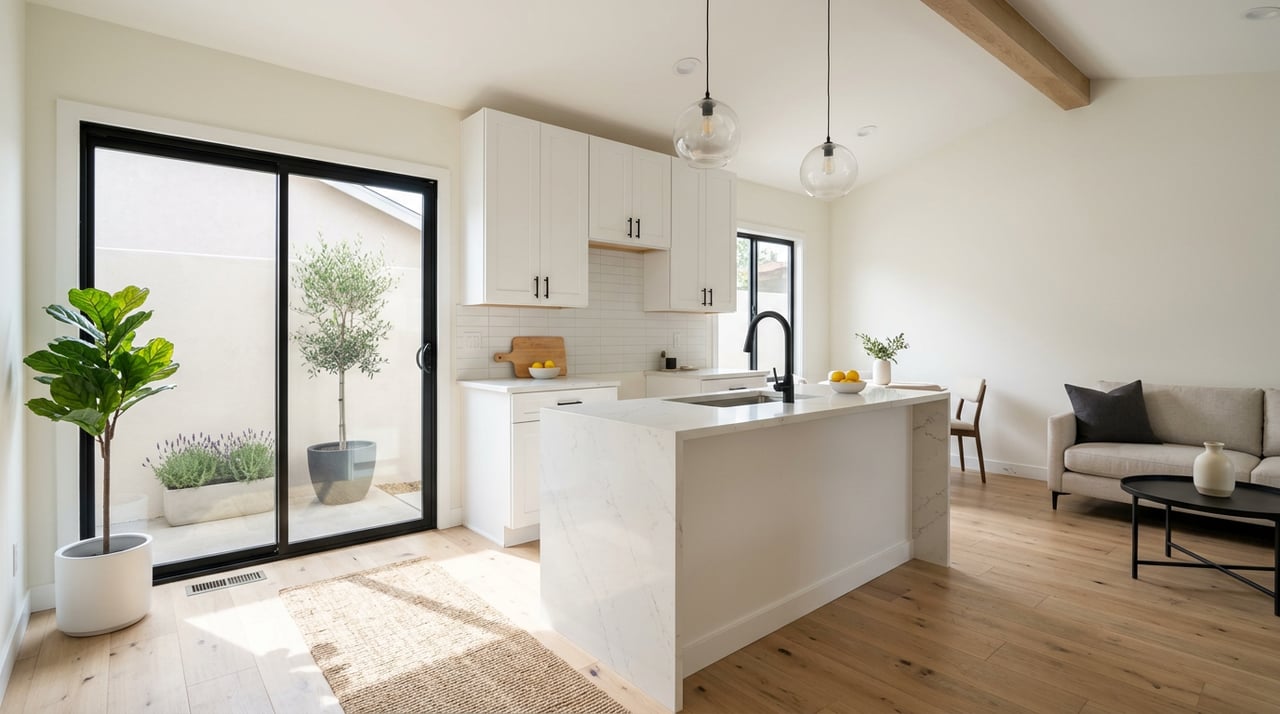
Downsizing in San Mateo: How to Find the Right Fit
March 5, 2026
March 5, 2026
Thinking about trading yard work for an easier, lock-and-leave lifestyle in San Mateo? If your kids are grown or you simply want less to maintain, you are not alone. Downsizing on the Peninsula can free up time, reduce monthly costs, and put you closer to the places you love. In this guide, you will see how the local market sets your budget, what to know about condos, townhomes, and smaller single-family homes, how to plan your sale and purchase, and the key details that protect your bottom line. Let’s dive in.
San Mateo remains a high-value market, which is good news if you have built equity. Recent local metrics show a citywide typical home value near $1.6 million, and a fast pace to pending status in roughly three to four weeks in early 2026. Other MLS-based summaries show a median sale price around $1.45 million with a median days on market near 17. Results vary by property type and neighborhood.
At the county level, single-family homes typically sell well above attached housing. Recent reporting placed single-family medians in the roughly $1.8 million to $1.95 million range, while condominium medians were in the low-to-mid $900,000s. You can review county context in the San Mateo County Assessor’s recent assessment roll overview at the county’s official site: the San Mateo County Assessor’s annual roll summary. This price gap matters if you plan to sell a house and buy a condo or townhome. It can also shape whether you keep extra proceeds for travel, investments, or emergency reserves.
Inventory on the Peninsula often runs tight for single-family homes and a bit more balanced for condos. Well-prepared, well-priced homes tend to move quickly. Expect micro-market variation based on location, condition, and amenities. A current market analysis from your agent will help you set realistic list and target purchase prices.
A condo is a form of ownership where you own your unit plus a share of common areas. Many San Mateo condos offer single-level living, elevator access, and proximity to downtown amenities. If you want to stop dealing with exterior maintenance, this can be a strong fit. You will pay monthly homeowners association dues that cover building and common-area upkeep, and dues can vary by building, size, and amenities. Industry snapshots show California HOA fees often running a few hundred dollars per month or more, depending on the property. Review the building’s budget, reserve study, and meeting minutes to understand financial health. Learn more about how condo ownership works in this primer on condo ownership.
Potential risks include special assessments if reserves are low or if large repairs are needed. Insurance details also matter. Associations may or may not carry earthquake coverage for the structure, so you need to understand your exposure before you buy.
Townhomes often deliver more space and privacy than a mid-rise condo and may include a small yard or private entry. Some townhomes are fee-simple ownership, which is closer to owning a traditional house, while others are a condo legal form. The setup determines what you own and what the HOA maintains. Get familiar with the differences in this overview of condos vs. townhouses and this explainer on townhomes and ownership.
Dues and responsibilities vary widely. In some communities, the HOA handles roofs and exterior paint. In others, you cover more of the exterior. Your agent will help you read the CC&Rs and maintenance matrix so you know what to expect.
If you want the most privacy and control, a smaller single-family home can work well. One-story homes are easier for aging in place, and on many Peninsula lots you may be able to add an accessory dwelling unit for rental income or caregiver space, subject to local rules. California has become more permissive about ADUs in recent years, but you should still confirm city-specific requirements.
The tradeoff is maintenance. You will handle your own roof, yard, fences, and exterior. There is no HOA to spread big capital costs, so plan to keep a repair reserve.
To choose the right fit, compare total monthly cost of ownership, not just the purchase price. For each property you consider, build a side-by-side estimate that includes:
Use this worksheet as a guide when you gather numbers from your lender and the HOA packet.
| Cost category | Condo or Townhome | Smaller Single-Family |
|---|---|---|
| Mortgage principal & interest | Lender estimate | Lender estimate |
| Property taxes | Based on purchase price | Based on purchase price |
| HOA dues | From HOA budget | Usually none |
| Homeowners insurance | HO-6 for condos; confirm master policy | Standard homeowners policy |
| Earthquake coverage | Check HOA master policy and loss assessment needs | Optional separate policy |
| Utilities | Unit size and building type | Varies by home size |
| Maintenance reserve | Lower for interiors, plan for special assessments | Higher for roof, exterior, yard |
Small changes can make a big difference. AARP’s HomeFit checklist outlines simple upgrades like grab bars, lever handles, brighter lighting, non-slip floors, and handheld showerheads. Bigger projects can include walk-in showers, wider doors, or stairlifts. Review the AARP HomeFit checklist to create a plan that fits your needs.
If you qualify by income, the City of San Mateo offers Home Rehabilitation Loan and Minor Home Repair programs that can assist with safety and accessibility projects. You can explore the City of San Mateo home repair programs for details and eligibility.
Rebuilding Together Peninsula also serves local homeowners with safety repairs and accessibility modifications through volunteer and contractor support. Their Safe at Home and related programs support seniors and low-income households. Learn more about Rebuilding Together Peninsula’s programs.
Many downsizers want easy access to groceries, parks, and healthcare. San Mateo’s downtown, Bay Meadows, and the Hillsdale area offer walkable options near transit. The Caltrain stations at San Mateo, Hillsdale, and Hayward Park connect you to nearby cities and services. See Caltrain resources for system information.
For healthcare, residents commonly use Sutter Health’s Mills-Peninsula Medical Center in Burlingame and the county’s San Mateo Medical Center. Proximity to your primary care team is often a top priority.
Standard homeowners and condo policies do not cover earthquake damage. In condos, the association may carry a master policy that could include or exclude earthquake coverage. If the association lacks earthquake insurance, a seismic event can lead to special assessments to repair the structure. You can buy a separate earthquake policy and consider loss assessment coverage to help with your share of covered assessments. The Insurance Information Institute explains earthquake coverage basics and risk.
Before you write an offer on a condo, ask for the master policy declaration page, confirm the deductible, and check whether the policy includes earthquake insurance. Your personal insurer can help you estimate the right HO-6 and earthquake add-ons.
Work with your lender early. Getting pre-approved and modeling carry costs for a short overlap period can reduce stress and help you act quickly on the right home.
Presentation matters, especially in a competitive market. The National Association of Realtors reports that staging often leads to higher offers and shorter time on market in many cases, with typical staging budgets remaining modest compared with potential returns. Review the NAR summary on how staging affects sale outcomes and talk with your agent about a focused pre-list plan.
If you are 55 or older, severely disabled, or a victim of a wildfire or natural disaster, California’s Proposition 19 may let you transfer your existing property tax base to a replacement home anywhere in the state. You can generally use this benefit up to three times, and you must purchase the replacement within two years before or after selling your original home, subject to value adjustment rules. File the required forms with the county assessor after you close on the replacement. Read the state’s Proposition 19 guidance and discuss timing with the county assessor so you do not miss any deadlines.
A reverse mortgage can help some older homeowners tap equity with no monthly mortgage payments, either to buy a home or to stay in place. This tool is complex and includes fees, ongoing tax and insurance obligations, and estate considerations. The Consumer Financial Protection Bureau explains the pros, cons, and questions to ask. Review the CFPB’s reverse mortgage guide and speak with a HUD-approved counselor and your financial advisor before deciding.
Downsizing is part lifestyle, part logistics. A local expert helps you map both.
If you want a premium, personal approach backed by modern marketing, partner with a local pro who was born and raised in San Mateo and delivers white-glove presentation with 3D tours, floor plans, and high-impact syndication. When you are ready, reach out to Caitlin Beanan for a plan tailored to your goals.
Ready to find the right fit and move with confidence? Connect with Caitlin Beanan for a tailored, step-by-step downsizing plan that puts your goals first.
Helpful links referenced above:
When you are ready to right-size on the Peninsula, reach out to Caitlin Beanan for a calm, step-by-step plan and premium marketing that showcases your home at its best.







Looking to buy, sell, or just have a question? I'm always available to help and would love to work with you. Contact me today to find out how we can be of assistance to you!