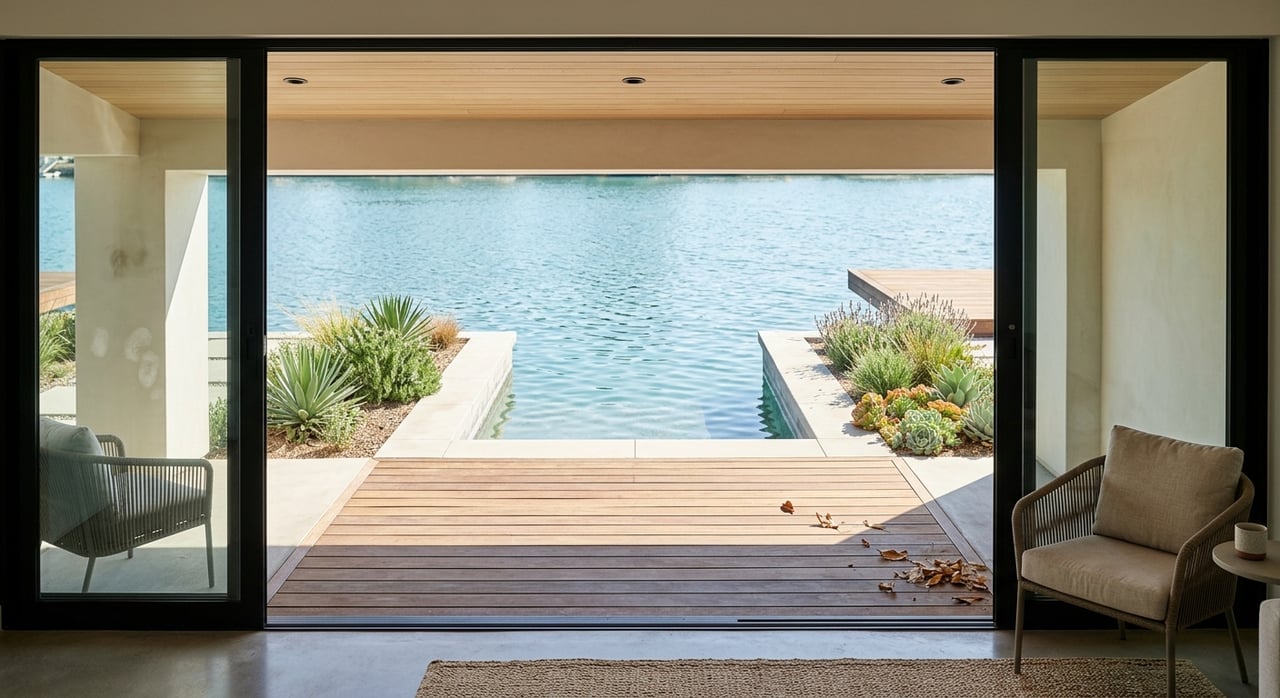
Is Foster City Waterfront Living Right for You?
June 18, 2026
June 18, 2026
If waterfront living is on your wish list, Foster City deserves a closer look. But living on the water here is not the same as living in a traditional marina neighborhood, and that distinction matters when you are deciding where to buy. Understanding how Foster City’s lagoons, levees, parks, and recreation actually shape daily life can help you decide whether this setting fits your goals. Let’s dive in.
Foster City’s waterfront is built around a lagoon-and-levee system rather than a classic marina. According to the city, the lagoon system covers more than 200 acres and winds about five miles through the community, while the levee protects most of the bay-front perimeter and connects to the Bay Trail.
That means water is woven into the layout of the city instead of being limited to one shoreline strip. In day-to-day life, this creates more of a water-centered suburban feel, where trails, parks, and neighborhood views are part of the experience. Some waterfront edges are also managed as sensitive habitat, so not every shoreline area is designed for heavy activity.
For many residents, the biggest draw is not just the view. It is the way the waterfront becomes part of your routine through walking paths, bike routes, open space, and easy access to low-key recreation.
The city says the levee pedway is used for walking, running, bicycling, and skating. The Bay Trail segment also runs as a mostly continuous paved multi-use route with access from neighborhood streets, which makes it easy to build outdoor time into your day.
Foster City also has more than 160 acres of parkland. That scale helps explain why the waterfront feels usable and lived-in, not just scenic from a distance.
If you picture large boats, marina traffic, and busy open-water conditions, Foster City may feel very different from what you expect. The lagoon is designed for a slower, calmer type of water access.
Powerboats are prohibited on the lagoon, and vessel speed is limited to 5 mph. Boats must be sail-powered, electric, or human-powered, which helps preserve the quieter character of the water.
The city also allows swimming, and San Mateo County Health regularly tests the water, especially near beaches. In the summer, the lagoon can get busy as swimmers and different watercraft share the space, so it is active, but still very local in feel.
One of the nice surprises about waterfront living in Foster City is the variety of ways you can use the water. You do not need to own a large boat to enjoy it.
The city offers:
This mix makes Foster City appealing if you want easy access to the water without the maintenance and scale of a private-boat lifestyle.
Not all waterfront pockets in Foster City feel the same. If you are home shopping here, it helps to understand how different areas function.
The central lagoon tends to feel the most social and park-oriented. Leo J. Ryan Memorial Park includes 20 acres of lawn, lagoon access, a gazebo, restrooms, a boathouse, and concession programming.
Nearby, Catamaran Park offers a lagoon stroll with a downtown backdrop. Marlin Park and Erckenbrack Park add more beach and playground energy, which gives this part of the city a relaxed, activity-friendly atmosphere.
The bay-front edge feels more open and wind-exposed. Shorebird Park offers Bay Trail access, bay views, benches, public art, and a fitness court.
Baywinds Park is known for views and windsurfing, and city planning also identifies it as a special-use area with recreation and habitat-restoration potential. If you like a more expansive shoreline feel, these areas may stand out.
Boat Park has a more practical, access-focused character. It is a 3.2-acre boat-launch facility with parking, a boardwalk, picnic tables, and lawn space.
The city also notes that small boats may be launched from any location on the lagoon. This is probably the closest Foster City gets to a conventional water-access lifestyle, though it still feels neighborhood-scaled rather than marina-driven.
Scenery matters, but waterfront living also comes with practical questions. In Foster City, flood protection is one of the most important.
The city says the levee system exists primarily for flood protection, and FEMA certifies it for the 1-percent annual chance flood. The city also says land within city limits remains in Zone X, where mandatory flood insurance is not required.
Foster City completed its Levee Improvements Project in February 2024. According to the city, that project increased the levee’s height and width to improve protection from storm and tide surges and to support sea-level-rise resilience through 2100.
Even so, the city notes that FEMA still encourages homeowners to consider flood insurance. If you are buying here, this is an important conversation to have early so you understand both current conditions and your comfort level.
Foster City’s waterfront is not a finished story. It is a place where long-term adaptation will continue to shape planning and infrastructure.
The city’s 2024 Climate Action Plan states that 99% of Foster City’s population lives within a sea-level-rise inundation area. The plan identifies risks including coastal flooding, erosion, groundwater rise, and saltwater intrusion.
For buyers, that does not automatically mean waterfront living is a bad fit. It does mean you should go in with a clear understanding that resilience, maintenance, and future adaptation are part of the local picture.
Waterfront living often comes with tradeoffs, and Foster City is no exception. The same features that make the area appealing can also create day-to-day considerations.
City planning documents note that geese, water quality, and beach conditions can affect lagoon-access parks. Community feedback has also pointed to interest in better trail connectivity and more activation along lagoon edges, including outdoor dining.
At the same time, the waterfront here is not built around a dense restaurant promenade. Casual dining and gathering are more event-based, such as the Wednesday Night Food Truck Marketplace at Leo Ryan Park, which adds energy without changing the overall low-key character.
Foster City can be a strong match if you want a home near parks, trails, open space, and calm water recreation. It can also work well if you value an outdoor lifestyle that feels easy to use on an ordinary weekday, not just on special occasions.
It may be a weaker fit if you are looking for a marina district, a highly commercial waterfront, or a private-boat culture centered around larger vessels. The appeal here is more about everyday livability, neighborhood access to water, and a quieter shoreline rhythm.
If you are considering a waterfront or water-adjacent home in Foster City, it helps to look beyond the view. The setting, access points, and surrounding park system can shape your experience just as much as the home itself.
As you compare options, pay attention to:
A thoughtful home search in Foster City is often about matching your lifestyle to the right micro-location.
If you want help evaluating Foster City neighborhoods and finding the right fit for your goals, Caitlin Beanan offers local Peninsula insight and personalized guidance every step of the way.

Looking to buy, sell, or just have a question? I'm always available to help and would love to work with you. Contact me today to find out how we can be of assistance to you!