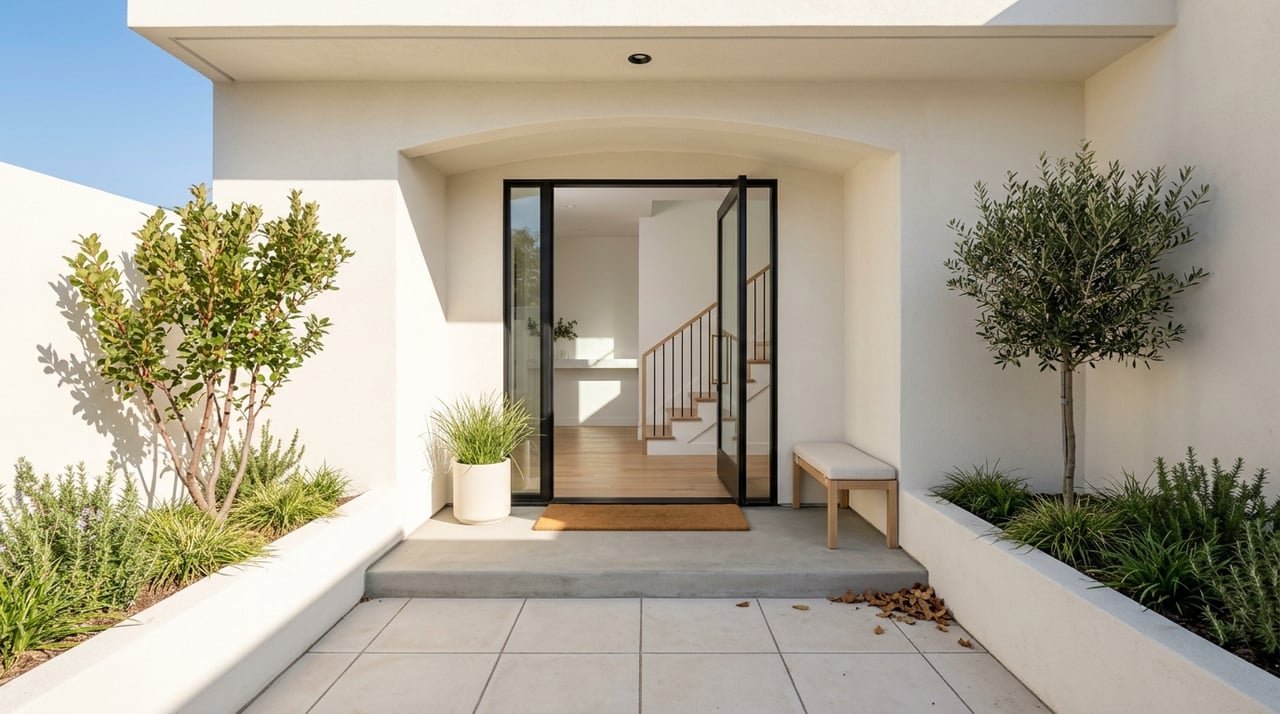
Condo Or Single-Family In Millbrae: Choosing Your Fit
July 2, 2026
July 2, 2026
Trying to choose between a condo and a single-family home in Millbrae? You are not alone. In a compact Peninsula city where transit access, price point, and property type can shape your daily life, this decision deserves a closer look. The good news is that each option offers clear advantages, and once you understand the tradeoffs, your best fit usually becomes much easier to see. Let’s dive in.
Millbrae is a small Peninsula city with a strong transit focus. The city identifies the Millbrae station area as a hub built around BART, Caltrain, SamTrans, and airport connections, which gives the location a distinctly commute-oriented feel.
That local context matters when you compare condos and single-family homes. In a city where location efficiency and housing costs both play a major role, the right property type often comes down to how you want to live day to day.
Current market snapshots also show a meaningful price gap. Recent figures place Millbrae’s median sale price at about $1,853,891, while Census QuickFacts reports a median owner-occupied home value of $1,934,900 and an owner-occupied rate of 60.8%.
In Millbrae, condos tend to offer a more compact, apartment-style layout. Recent examples include a 1-bedroom, 1-bath unit with 724 square feet priced at $725,000 and 2-bedroom, 2-bath units around 1,147 to 1,156 square feet priced roughly from $930,000 to $980,000.
That gives many buyers a lower entry point compared with detached homes. If you want to own in Millbrae but stay below the price range of many single-family properties, a condo may open the door sooner.
Condos in Millbrae also tend to cluster near downtown and the station area. If you value proximity to transit, restaurants, services, and a more lock-and-leave style of living, that location pattern can be a real advantage.
Condo ownership often comes with shared-building living instead of lot-based ownership. Rather than a private yard, you are more likely to have a balcony, patio, courtyard, or access to shared landscaped common areas.
You will also want to factor in HOA dues. Recent Millbrae condo examples show monthly HOA fees ranging from about $342 to $482, with coverage that may include roof work, exterior painting, common-area maintenance, landscaping, insurance, garbage, water, sewer, gas, or security and doorman service.
That can simplify your monthly planning. Instead of budgeting separately for every exterior item, some of those costs are bundled into one recurring fee.
A condo can be a strong fit if you want:
For many first-time buyers or buyers with busy schedules, that combination can make condo living feel more practical and predictable.
Single-family homes in Millbrae usually offer a very different ownership experience. Recent listing snapshots show homes such as a 3-bedroom, 2-bath home with 1,470 square feet on an 8,400-square-foot lot, a 4-bedroom, 3-bath home on a 5,418-square-foot lot, and another remodeled 3-bedroom, 2-bath home on a 9,100-square-foot lot with ADU potential.
The price difference is significant. In the sample set, current examples ranged from about $1.99 million to $3.38 million, which places detached homes well above many local condo price points.
What you are paying for is not just the structure, but also the land and flexibility that come with it. That often changes how the home functions for you now and how it could evolve later.
Millbrae single-family listings often highlight features like 2-car garages, family rooms, yards, patios, gardens, and stronger indoor-outdoor flow. Large or flat yards are a recurring feature in current examples, along with future landscaping or expansion potential.
City development rules also support that detached-home pattern. Millbrae states that single-family homes must provide at least two garage or equivalent parking spaces, are limited to 50% lot coverage and 55% floor area ratio, and must meet setback requirements.
The city also lists ADUs and JADUs as accessory uses in the R-1 single-family district. For buyers thinking long term, that can make a detached home especially appealing.
A single-family home may be the better fit if you want:
If your priorities include space, separation from shared walls, or room to adapt over time, a detached home often checks more of those boxes.
One of the biggest differences between condos and single-family homes is how maintenance is handled. Under California’s Common Interest Development law, the HOA is generally responsible for repairing, replacing, and maintaining the common area, while the owner is generally responsible for the separate interest and any exclusive-use common area unless the governing documents say otherwise.
That helps explain why condo dues often cover exterior paint, roofing, landscaping, garbage, and some insurance-related costs. With a detached home, you typically take those costs on directly and budget for them as they come up.
Neither approach is automatically better. It really depends on whether you prefer shared management with monthly HOA dues or more direct responsibility and control over maintenance decisions.
At purchase, property taxes are broadly similar regardless of whether you buy a condo or a single-family home. San Mateo County states that Proposition 13 reappraisal generally happens upon change of ownership or new construction, and annual increases are generally capped at 2%.
The county also notes that supplemental assessments can create additional tax bills after a transfer. On top of that, annual tax bills may include special assessments, special taxes, and Mello-Roos bonds.
For qualifying owner-occupied homes, the California State Board of Equalization says you may claim a $7,000 homeowners’ exemption. Because taxes are tied more to assessed value and ownership events than to property type alone, your total purchase price often has the bigger impact on tax cost.
If you are thinking beyond the next few years, flexibility becomes a major part of the condo-versus-single-family decision. Condo owners need to review the CC&Rs carefully because leasing rules and other restrictions can vary by development.
California law limits some HOA rental restrictions, but the details still depend on the specific community documents. That means two condos in the same city can offer very different levels of flexibility.
Single-family owners in Millbrae often have more room to consider future changes, including ADUs or JADUs, subject to permits and design review. If you want the option to expand, create additional living space, or simply have more control over future use, a detached home usually gives you more pathways.
If you are still torn, try narrowing the decision to the factors that will affect your week the most. Think about your commute, your budget, how much maintenance you want to handle, and how important outdoor space is to you.
A condo may be the stronger choice if you want a lower entry price, easier upkeep, and a transit-friendly location near downtown or the station area. In Millbrae, current condo examples largely sit in the roughly $725,000 to $1.0 million range and often trade private yard space for convenience and shared services.
A single-family home may make more sense if you want land, privacy, garage space, and room for the property to grow with you. In Millbrae, that usually means spending more up front, but gaining more control over how you live in and use the home over time.
| Factor | Condo | Single-Family Home |
|---|---|---|
| Typical price examples | About $725,000 to $980,000 | About $1.99M to $3.38M |
| Outdoor space | Balcony, patio, or shared area | Private yard, patio, garden space |
| Maintenance | More shared through HOA | More direct owner responsibility |
| Monthly extras | HOA dues of about $342 to $482 in recent examples | No HOA in many cases, but owner handles exterior costs |
| Transit orientation | Often near downtown and station area | Varies by location |
| Future flexibility | Depends on HOA rules and CC&Rs | More potential for changes, including ADU/JADU options |
In Millbrae, this is not just a financial choice. It is a lifestyle choice shaped by how you want to spend your time, what kind of space you need, and how much flexibility matters to you.
If you want help weighing the tradeoffs in a way that matches your goals, budget, and timeline, working with a local expert can make the decision much clearer. When you are ready to explore Millbrae condos or single-family homes with a strategy tailored to your needs, connect with Caitlin Beanan.
Looking to buy, sell, or just have a question? I'm always available to help and would love to work with you. Contact me today to find out how we can be of assistance to you!